| Vol. XLI, No. 4 | Darien, Fairfield County, Connecticut | December 2025 |
|
|
President's Message
Dear MGS members and friends,
After five very rewarding years as President of the Middlesex Genealogical Society, I will be stepping down from this role. It has been an honor to serve this organization and to work alongside so many talented, generous, and passionate volunteers.
I am delighted that Steve Flynn has agreed to take on the role of President. Steve is a terrific volunteer with a deep commitment to genealogy and to MGS. I know he will bring energy, ideas, and steady leadership to the position, and I hope you will give him the same support and encouragement you have given me.
Although I am handing over the reins, I am not going very far. I will remain on the Board and will be taking on the role of Vice President. I look forward to continuing to work with Steve, the Board, and all of you as we plan programs, support research, and keep MGS strong for years to come.
Genealogy has always mattered to me because it is about more than names and dates. It is about memory, identity, and connection. There is a modern saying, often attributed to the artist Banksy:
“They say you die twice. One time when you stop breathing and a second time, a bit later on, when somebody says your name for the last time.”As genealogists, we push that “second time” farther into the future. Our mission is to preserve memories for families — to make sure that names are not forgotten, that stories are not lost, and that those who came before us remain part of the lives of those who come after. That work is meaningful, and I am proud of the role MGS plays in it.
To everyone who has given their time — as officers, committee members, speakers, program organizers, technical helpers, and faithful attendees — thank you. Your support has made my years as President both productive and deeply enjoyable. I am grateful for your patience, your ideas, your good humor, and your friendship.
I look forward to continuing our work together in my new role, and to supporting Steve as he leads MGS into its next chapter.
With appreciation,
Sara Zagrodzky
Outgoing President, Incoming Vice President
Middlesex Genealogical Society
In This Issue
Upcoming MGS Presentations
Saturday, February 7, 2026. 2:00 pm on Zoom "Genealogical Clues and Cousin Bait on Find a Grave." Presented by Marian B. Wood Marian B. Wood Marian B. Wood |
Tips and tricks for using the free Find a Grave site to research ancestors, memorialize their burial places, and connect with cousins. Beyond the basic search techniques that can uncover new genealogical clues, see how to catch the eye of cousins and researchers by linking family-tree members, posting ancestor bios, submitting edits and flowers, and personalizing your member profile. Also learn why and how to create a virtual cemetery for your ancestors--so relatives and descendants will know exactly where the bodies are buried!
This is a Virtual meeting conducted via Zoom for MGS members-only. Please send an email to mgsvolunteer@gmail.com to request the Zoom presentation information. Presentation recordings will be available to MGS members for 30 days following the presentation.
Born in the Bronx and transplanted to Connecticut, Marian Burk Wood is the author of the popular genealogy book Planning a Future for Your Family's Past and a long-time blogger about family history methodology, issues, and discoveries at Climbing My Family Tree. She earned an MBA from Long Island University and a BA from the City University of New York. Marian has been researching her family tree for 28 years, with a special interest in documenting, sharing, and safeguarding family history for future generations.
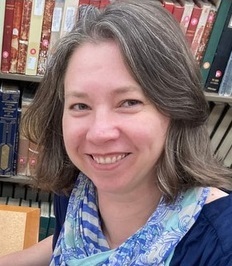 Michelle Dowd Torosian Michelle Dowd Torosian |
Are you interested in tracing your family’s roots in New York but aren’t sure where to start? Genealogy is a fascinating hobby but tracing your New York ancestors can be challenging. Join professional genealogist Michelle Dowd Torosian as she shares tips and techniques to best utilize the unique records of the Empire State.
Michelle Dowd Torosian is a professional genealogist and founder of Torosian Genealogy, LLC. Her extensive research experience and sharp analytical skills enable her to work with clients undertaking historical research, solving the mysteries lurking in the branches of their family trees, identifying unknown ancestors, and recovering forgotten stories. A former CPA with Deloitte and graduate of Rutgers University, Michelle is a certificate holder from Boston University’s Genealogical Research program and the ProGen Study Group. Michelle serves as president of the Westchester County Genealogical Society and is a trustee of the Westchester County Historical Society.
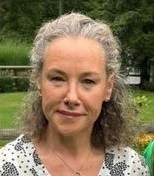 Loretto Leary Loretto Leary |
Loretto Leary is Educational and Cultural Director of Ireland’s Great Hunger Museum, which was established by leaders of the Gaelic-American Club and Quinnipiac University, which have been working together in close collaboration for many months now on the preservation and future display of the IGHM collection. This work will keep the artifacts in Connecticut and assures a sustainable future and broad visibility for the museum.
In This Issue
 Kari Kjontvedt Weis Kari Kjontvedt Weis |
Unlocking Ancestors with AI: Mastering FamilySearch's Full-Text Search
On November 1 this year, at Darien Library, Kari Kjontvedt Weis talked about FamilySearch's powerful AI full-text search and how it can revolutionize our genealogy research. This meeting equipped us with the skills to find elusive ancestors and hidden gems in vast digitized records collections. We learned essential tips and tricks to maximize our search results, including effectively using keywords, filters, and wildcards. Whether we're just starting our family history journey or looking to break down brick walls, this workshop showed us how to leverage this game-changing tool to uncover valuable information, discover new leads, and enrich our understanding of our ancestors' lives. It took our research to the next level and unlocked the power of AI driven genealogy.
In This Issue
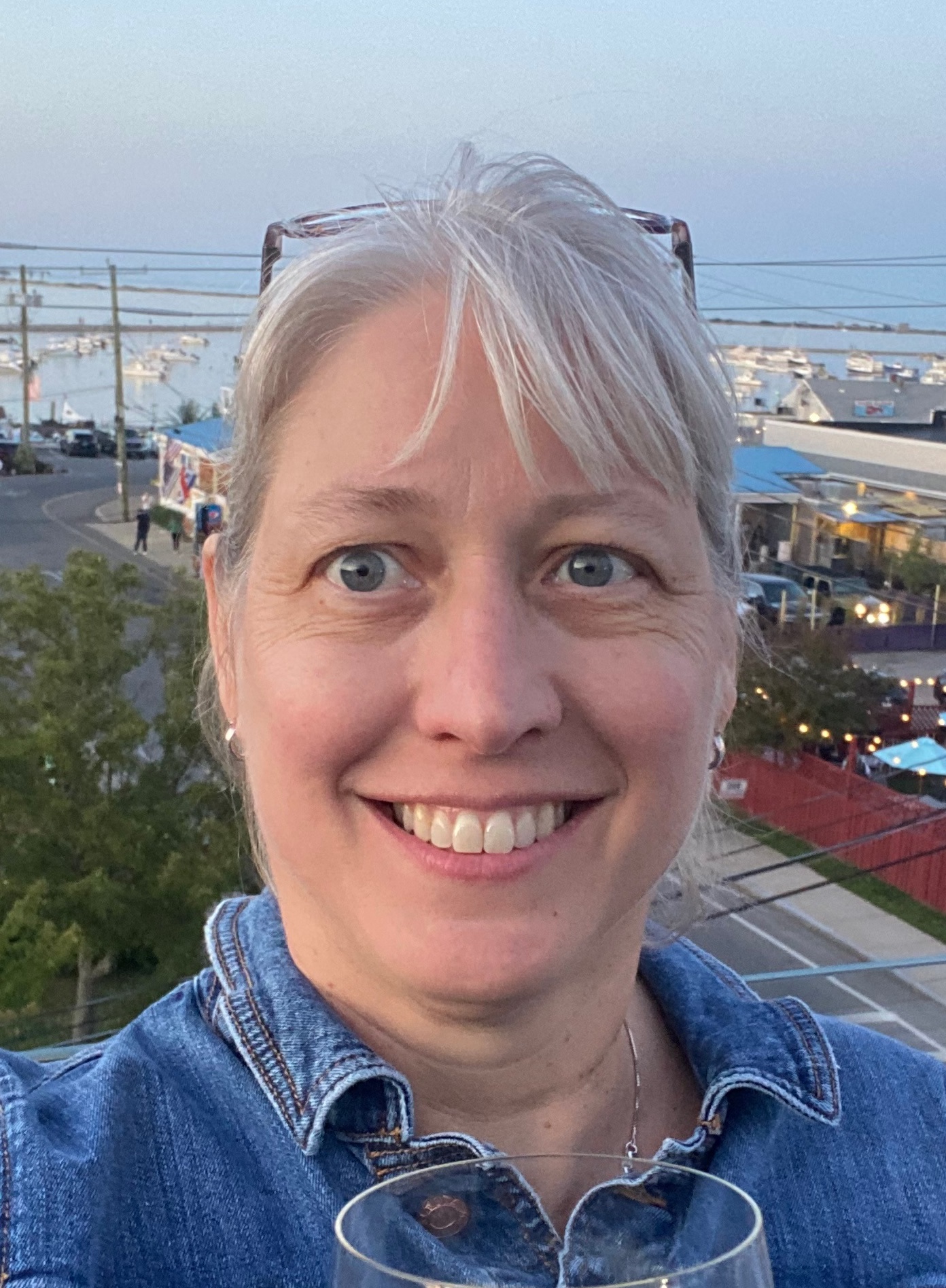 Sara
Zagrodzky Sara
Zagrodzky |
Genealogical Naming Traditions
On October 4 this year, at Darien Library, Sara Zagrodzky discussed genealogical naming patterns. She said they involve specific traditions where children are named after relatives, often following a structured order. Common patterns include naming the first son after the paternal grandfather, the second son after the maternal grandfather, and the first daughter after the maternal grandmother. These patterns can be valuable for identifying ancestors, especially when documentary evidence is scarce.
In This Issue
The Pilgrims Ate LOTS of Corn
By Carol Wilder-Tamme
The First Thanksgiving is an important chapter in America's origin story. In 1621, English colonists known as the Pilgrims, who had settled in Plymouth Colony, shared a harvest feast with the Wampanoag people after a successful harvest. This event, now remembered as the "First Thanksgiving," involved about 53 Pilgrims and 90 Wampanoag, led by Massasoit, feasting together for three days. The celebration was a harvest festival that included venison, fowl, and corn.
My ancestry goes back to the Mayflower, and I want my family to know. My Mayflower ancestors include: Francis Cooke (a Separatist that had lived in Leiden to escape persecution in England), and adventure sojourners; Richard Warren, Stephen Hopkins and his daughter Constance who was about 13 during the crossing.
Of course, you need to “know your audience!"
Are you trying to interest adult children or young grandchildren? For my crew, wearing the same T-shirts is easy and painless, even for my spouse, whose family traveled a different path than mine.
Children, aged 3 or 4, are very into pretend, so at that age, my two grandchildren and I would lean from one foot, then back to the other foot, pretending we were on a rocking ship on the ocean. The kids and the “family audience" loved it!
Now that my grandchildren are 8 and 9, each child gets to light a votive candle (kids like to light candles) with the name of a Mayflower voyager on it. I ask them to say the name of the person, and thank them for their actions. “Thank you ____________, for leaving the comforts of your home in England to cross the ocean, to re-start you life in this new world." If family stories are repeated in a memorable fashion, memories will be made.
You do not need to write a book, or a Broadway musical (like Hamilton!) to teach your family important family stories!
|
|
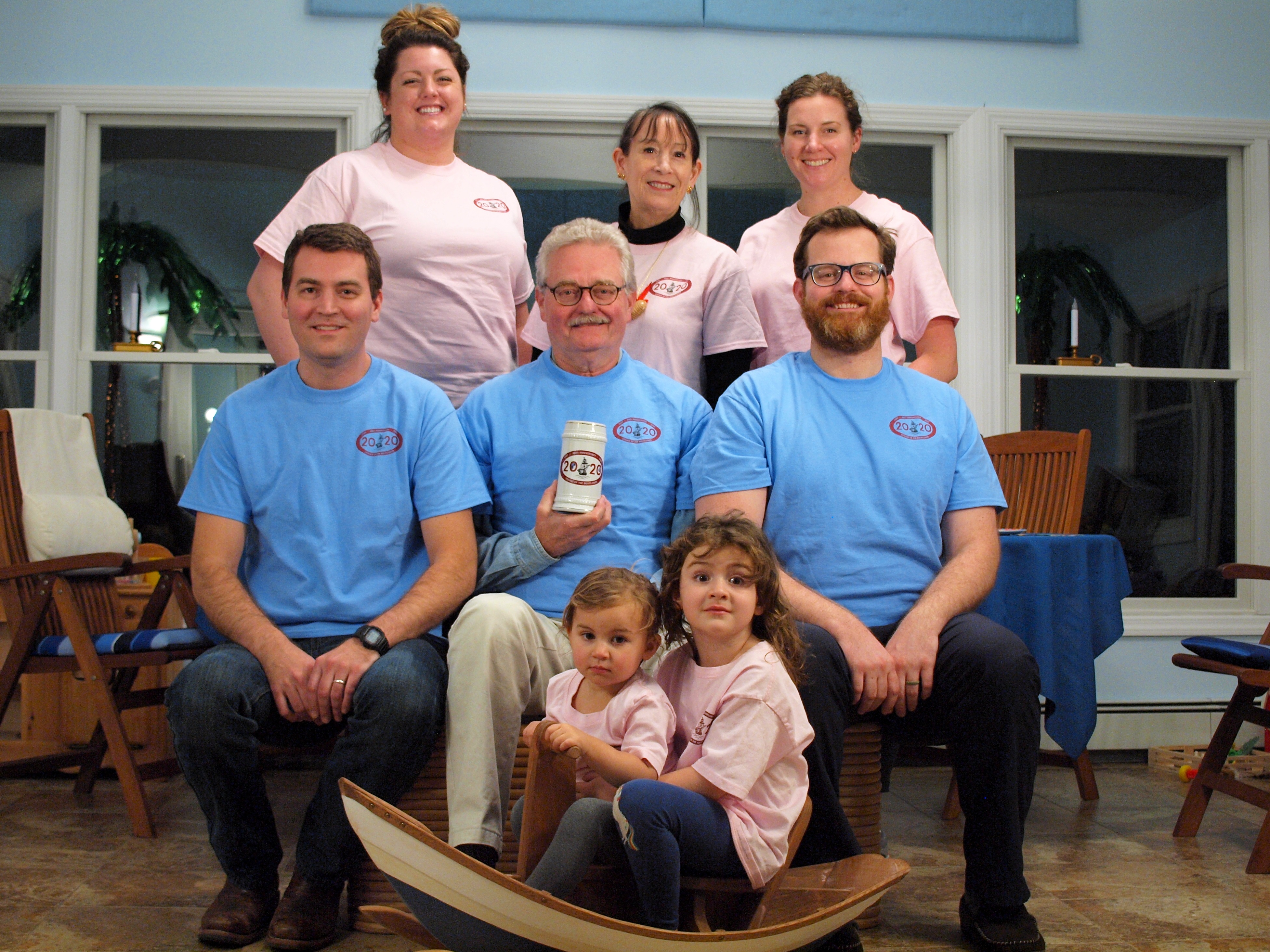 Wilder-Tamme family at Thanksgiving
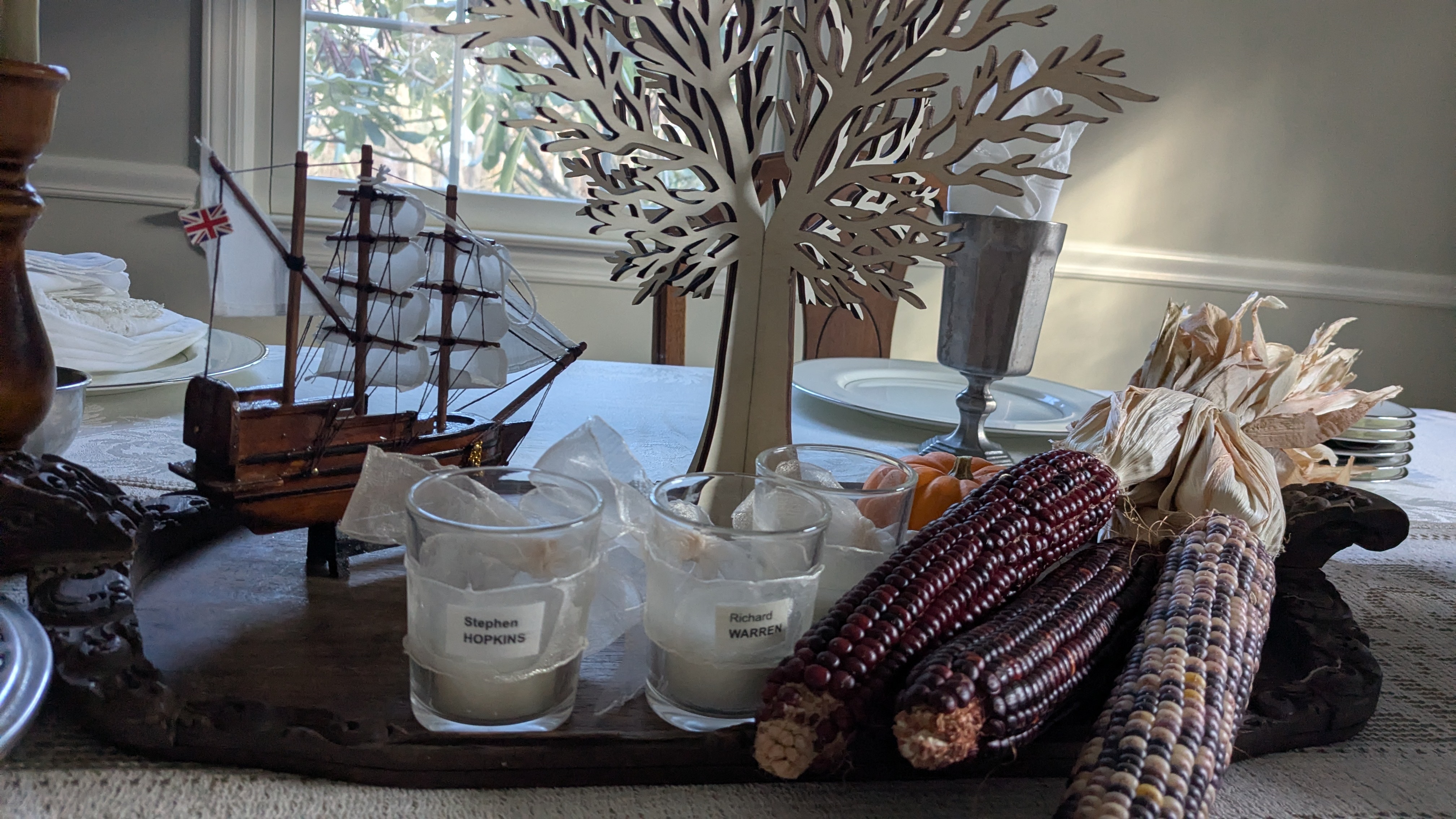 The Mayflower, votive candles and CORN in front of the family tree
I have corn on the table because the Pilgrims ate LOTS of corn, corn mush for breakfast and corn at lunch and dinner. Some of them complained about the need to eat so much corn, but they had been starving by the end of the voyage so William Bradford, told them they should Thank God they had plenty of corn to eat now! Smiles.
In This Issue
How We Got Connected with Colonial America
By Peter Biggins
My wife Marilyn Carroll and i were born and bred in the Midwest. Our ancestors came over from Ireland, Germany, and Switzerland - not England. They came between 1834 and 1880 - not 1600s or 1700s. They settled in Ohio, Michigan, Illinois, and Wisconsin.
 |
 |
In 1972, we moved from a Chicago suburb to Darien, Connecticut, with four young children. In 1976, we celebrated the United States Bicentennial. We took our children on trips to Boston and to Independence Hall in Philadelphia. On Thanksgiving 1977, the family visited Plymouth Rock.
Fifty years later, we are celebrating the United States Semiquincentennial. Semiquin- is much more complicated sounding than Bi- so they decided to call it America 250. (In 1926, there was a Sesquicentennial Exposition, a World's Fair in Philadelphia. In 1876, there was a Centennial Exposition in Philadelphia. It was a World's Fair, the first to be held in the United States. In 1826, there was no celebration. In fact, former Presidents Thomas Jefferson and John Adams died on July 4, 1826.)
So, with the coming of America 250, how are we connected to colonial America?
The Red Mill
 |
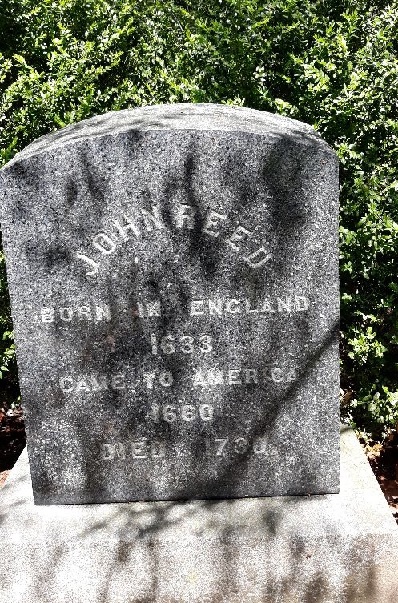 |
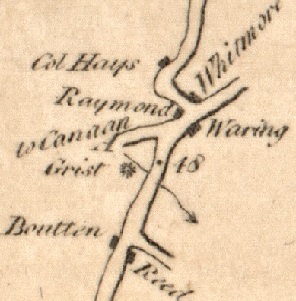
In 1989, we got a connection with colonial America. After living in Detroit and Dallas for 12 years, we moved back to Darien and bought a house on Old Kings Highway North. It was on the site of The Red Mill, a grist mill built by John Reed in 1692 and dismantled in 1908. There are remnants: the dam on the Five Mile River, the mill pond, the mill run, and a very small part of the mill foundation. John Reed was born in 1633 in Cornwall, England. In 1660, he emigrated to Providence, Rhode Island. He moved to Norwalk, Connecticut, and bought a large tract of land on the east side of the Five Mile River that became known as Reed's Farms. In 1692, he built The Red Mill on the Five Mile River. John Reed died in 1730 and is buried in the back yard of a house a few doors down from ours.
To the left is an excerpt from the 1789 Colles Map 4, showing what is now Old Kings Highway North and the Red Mill (Grist). The number 48 is the miles to Federal Hall, on the Kings Highway in New York. Present day streets are shown: Richards Avenue to the north (A to Canaan) and Rowayton Avenue and Raymond Street to the south. See: The Red Mill.
Genealogies of My Daughters-in-Law
In 2002, I retired and got interested in genealogy. Some of my Biggins cousins told me they were having a family reunion in June 2003 at Valcour, in New York, on Lake Champlain. (One of them had moved to Albany from Chicago.) This gave me something to shoot for. I prepared a 50-page report containing family histories, printed copies, and distributed them at the reunion. Realizing later that the 50-page report I did in 2003 had an error and was missing new information, and wanting to extend my research to all my ancestors and to my wife Marilyn's ancestors, I decided a Web site was the only way to go. In Fall 2004, I took a course in website development at nearby Norwalk Community College (on the Five Mile River) and started a website called PetersPioneers. I eventually became a member of MGS and its webmaster.
The genealogy of myself and my wife (i.e., our children's ancestors) did nothing to connect us with colonial America. But, I finally got around to looking at the ancestors of my daughters-in-law, Kerry and Erin. As you can tell by their given names, they are not mainly connected with colonial America. Each, however, has a 1/32nd connection with colonial America. Kerry is from Vermont. Erin is from Connecticut.
- Kerry's great grandmother Jennie Cockle Duprey was an 8th cousin of Calvin Coolidge, President of the United States from 1923 to 1929. Jennie and Calvin both go back to John Coolidge 1604-1691, who was born in Cottenham, Cambridgeshire, England, and emigrated to Watertown, Massachusetts, in 1635
- Erin's five-great grandfather, Daniel Baldwin, was a 4th cousin of two famous brothers
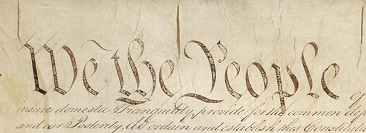
- Abraham Baldwin 1754-1807 - Signer of United States Constitution
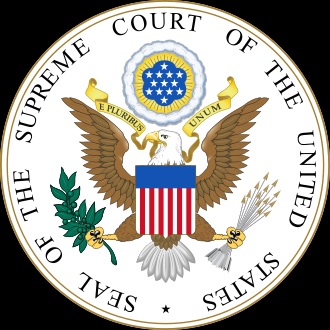
- Henry Baldwin 1780-1844 - United States Supreme Court Justice
- Erin's nine-great grandfather, Joseph Baldwin, was a founder of Milford, Connecticut, in 1639. He was one of 44 English colonists who are on the First List of Planters. He was born in Cholesbury, Buckinghamshire, England.
- Erin's nine-great grandfather, Richard Goodrich, was a founder of Guilford, Connecticut, in 1639. He was one of 25 English colonists who signed the Plantation Covenant of Guilford during their Atlantic crossing. He was born in Harrogate, North Yorkshire, England.
|
|
|

So, my wife and I are not descended from colonial Americans, but five of our grandchildren are..
The Y-DNA of Charles Carroll of Carrollton
My wife is a Carroll, but we found out she is the wrong kind of Carroll. Like many Carrolls in America, my wife's family thought they were related to Charles Carroll of Carrollton, signer of the Declaration of Independence (who, in turn, was descended from the Ely Carrolls).
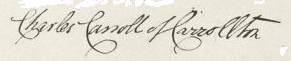 Signature of Charles Carroll of Carrrollton on the Declaration of Independence, 1776. |
After I had my Y-chromosome DNA tested, I started to wonder about my wife's Carrolls. We found a male second cousin of my wife, Michael Patrick Carroll, and had his Y-DNA tested (Y-DNA is passed down from male to male like surnames). Turns out, he was descended from the Carrolls of Breassal Breac rather than the Carrolls of Ely Carroll. But I was hooked on Ely Carroll. Kevin Carroll, who started the Carroll project at Family Tree DNA in 2004, had found a descendant in 2008 of Charles Carroll of Carrollton. In 2011, I decided to start a project at Family Tree DNA devoted to the Y-DNA of testers descended from Ely Carroll (O'Cearbhaill Ele). See: Z16291 Ely Carroll.
Charles Carroll of Carrollton was the son of Charles Carroll of Annapolis. He was a grandson of Charles Carroll the Settler, who had emigrated from Aghagurty. County Offaly, Ireland, to the colony of Maryland in 1688. Charles Carroll of Carrollton was born in a brick house in Annapolis built by his father on a street that is part of the Kings Highway.
On the Street Where You Live
In May 2023, when Charles III was crowned King of England, I wondered "who was Charles II" and found that the street I lived on was part of a 1,300-mile highway ordered in 1664 by Charles II to unite the colonies. The Kings Highway runs between Boston, Massachusetts, and Charleston, South Carolina. See: The Kings Highway.
The King’s Highway was the most important road in colonial America and served as the major transportation route for the colonies. It played a vital role in the American Revolution as military route and was used by George Washington's army during the war. It was also used by early colonists for trade and transportation of goods. It played a critical role in the ultimate independence of colonial America from England even though it was ordered to be built by Charles II of England.
When the Kings Highway was fully completed in 1735, it was basically a trail. Wagons and stagecoaches used it, but it was difficult going with few bridges and many river crossings. Sections were often impassable.
Some famous places on the street where I live are shown in the table below.
| Massachusetts | Boston Town Hall (Old State House), Old South Meeting House | 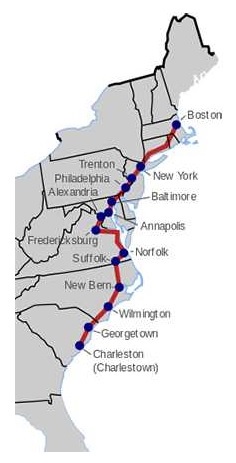 Kings Highway Map. Source: King's Highway (Charleston to Boston) |
| Rhode Island | College Hill, South Kingstown named after King Charles II | |
| Connecticut | Yale University | |
| New York | Central Park, Millionaire's Row, Madison Square Park, Ladies Mile, Union Square, The Cooper Union, Newspaper Row, Trinity Chapel, New York Stock Exchange, Federal Hall | |
| New Jersey | Princeton University | |
| Pennsylvania | Benjamin Franklin's House, Independence Mall, President's House, Declaration House | |
| Delaware | Brandywine Bridge, Cooch's Bridge | |
| Maryland | Charles Carroll House in Annapolis | |
| Virginia | Arlington National Cemetery, Mount Vernon, College of William & Mary, Colonial Williamsburg, Siege of Yorktown | |
| North Carolina | Edenton Tea Party | |
| South Carolina | Myrtle Beach, Charleston |
There are more ways than one to feel connected to colonial America.
In This Issue
MGS Survey Analysis
By Steve Flynn
At our November 1st Member Meeting, I shared the results of our 2025 Member Survey, which focused on Special Interest Groups (SIGs). For those who couldn’t attend, this article provides a summary of the findings. To give additional context, I’ve also included highlights from earlier surveys conducted in 2015, 2017, and 2018.
Participation Over the Years
- 2017: 35 responses
- 2018: 45 responses
- 2025: 29 responses
Unfortunately, the number of respondents in 2015 is unknown. One notable difference is that the 2025 survey was conducted anonymously, while earlier surveys collected participants’ email addresses.
Member Demographics
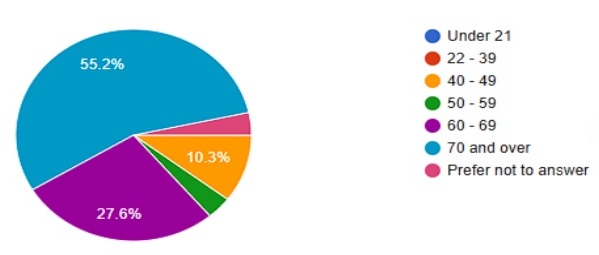
In 2025, we asked members to share their approximate age. As expected, our membership continues to lean toward those aged 60 and older - a reflection of the experience and perspective that enriches our society.
 |
Where Members Live
Earlier surveys (2017 and 2018) asked about hometown roots, while the 2025 survey focused on members’ current primary residence. The results show strong roots and current presence in Darien and neighboring communities.
| Location | Hometown | Current Home | |
|---|---|---|---|
| 2017 | 2018 | 2025 | |
| New York City | 9% | 17% | 0% |
| Darien | 6% | 4% | 28% |
| New Canaan | 6% | 4% | 7% |
| Old Greenwich | 6% | 11% | 0% |
| Norwalk | 3% | 4% | 17% |
| Fairfield | 9% | 2% | 3% |
| Other | 63% | 57% | 45% |
Interests in Genealogy
Across all surveys, members consistently expressed enthusiasm for presentations and special interest group meetings. The most popular areas of interest include:
- Regions of Origin:
- Ireland
- Germany/Prussia
- Great Britain
- Tools & Techniques:
- DNA and Genetic Genealogy
- ABCs of Genealogy
- Ask a Genealogist
- Researching the National Archives of New York
- Research at the New York Public Library
- Using Ancestry.com
- Using FamilySearch.org
- Family History Writing
Looking Ahead
These survey results remind us of the diverse interests within our society. Whether exploring ancestral homelands or mastering new research tools, our members continue to seek opportunities to learn, connect, and share their stories. The feedback will guide us in planning future programs that reflect both tradition and innovation in genealogy.
Consistent with the feedback we have received form these survey, Kari Kjontvedt Weis’s presentation on November 1st showed us the power of FamilySearch’s Full-Text Search feature and Michelle Dowd Torosian’s March 7th presentation will focus on how to best use the unique records available in New York State.
We need your help!
We would love to be able to conduct small group working sessions and we are recruiting additional Board members. If you are interested in volunteering as a member of the Board or organizing small group working sessions, please send an email to mgsvolunteer@gmail.com.
In This Issue
Translating, Transcribing and Summarizing Documents Using AI
©2025, copyright Thomas MacEntee. All rights reserved.
By Thomas MacEntee, Genealogy Bargains
The power of artificial intelligence can be used to assist genealogists in translating, transcribing, and summarizing a variety of genealogy records. A handwritten baptismal record from the 1800s? No problem. A faded newspaper obituary? No problem. Most AI platforms can help generate useful content for genealogical research.
What is Artificial Intelligence and How Does it Work?
AI stands for Artificial Intelligence and represents computer-based systems that can “mimic” human intelligence. The goal is to have these systems perform human tasks. The most discussed features of artificial intelligence are “deep learning” and “generative AI.” Deep learning mimics the human brain in that it looks for patterns using vast amounts of information to interpret photos, audio, and text. Generative AI actually “generates” new photos, audio, and text, based on information provided by the user, and again, uses its own database of “training data” to understand patterns and generate output that matches the user’s query.AI Platforms for Translating, Transcribing and Summarizing Documents
While genealogy vendors are incorporating AI into features provided to users, there are some popular AI platforms open to the public that you might want to consider using.
| ChatGPT | Meaning “Chat Generative Pre-trained Transformer.” The most popular publicly-accessible artificial intelligence platform |
|---|---|
| Claude | An artificial intelligence chatbot created by the company Anthropic. Designed to generate text content and engage in conversations with users using human-like responses |
| CoPilot | An AI-powered intelligent assistant that helps you get answers and inspirations from across the web, supports creativity and collaboration, and helps you focus on the task at hand |
| Gemini | Developed by Google (formerly known as Bard). Describes itself as “a family of AI models developed by Google's AI research labs DeepMind and Google Research. Gemini is Google's largest and most flexible AI model, able to run on data centers and mobile devices” |
Summarization
Ever find yourself staring down a massive text—maybe a thick local history volume, an old genealogy journal, a lengthy family narrative, or even a centuries-old account of your ancestors’ homeland—wondering how you’ll uncover the key details hidden inside? Let’s face it: reading through hundreds of pages can drain your time and energy. This is where artificial intelligence steps in with a game-changing advantage. AI-powered summarization tools can quickly zero in on the names, themes, and must-have tidbits, letting you skip straight to the parts that matter most to your research.How To
- Start a new chat on the AI platform.
- Upload the document to be summarized. Best formats are PDF or Microsoft Word. NOTE: some FREE versions of AI platforms may limit your ability to upload documents.
- Enter your summary prompt. Example: “Create a summary of this book The Descendants of David Putman published in 1916 extracting family groups and tracing migration routes and patterns by generation.”
- Review generated text and refine summary using modifying language.
Providing Contextual Prompts
AI models perform better when given context. When requesting a summary, explain the nature of the document, its time period, and why it matters in the prompt. For example:“Please summarize This local history book about rural New York in the late 19th century. I am looking for information related to the Crawford family, their property holdings, and any mention of their participation in the community church.” Results will vary based on which AI platform you use and if you use the FREE or PAID version. Also consider adding “style modifiers” such as “use bullet point style”.
Iterative Refinement
If the initial summary feels too vague or misses key details, refine your request. Add instructions like:“Please revise the summary to highlight any mention of the Crawford family. Focus on names, dates, and property transactions between 1850 and 1900.” This iterative process helps guide the AI toward more relevant and accurate outputs.
Transcription
Transcription is one of those essential skills that can make a world of difference in your genealogy research. It turns those tough-to-read documents—faded newspaper clippings, typed census sheets, scribbled diary pages, and old family letters—into text you can actually work with. Each record type has its own quirks: early newspapers might have ink that’s barely there and columns that twist and turn, vital records sometimes mix tidy printed text with scrawled annotations, and those personal letters you inherited often feature challenging handwriting and outdated language that’ll send you flipping through old dictionaries.
Thanks to recent advances in artificial intelligence, we’re now seeing tools that can handle a lot of that tricky transcription work for us. Instead of squinting at spidery handwriting and guessing at every other word, you can rely on AI-driven OCR (optical character recognition) and handwriting recognition to do much of the heavy lifting. These cutting-edge models are trained on massive sets of historical texts and fonts, which means less time straining your eyes and more time putting that data to use in your family history projects.<.p>
Types of Documents Commonly Transcribed
| Newspaper Articles and Obituaries | Historical newspapers are treasure troves of genealogical data—local news, birth and death announcements, marriage notices, and social columns can reveal personal details about ancestors. After using OCR, you can transform these clippings into text that is easily searchable and can be summarized or analyzed using AI tools |
|---|---|
| Vital Records (Birth, Marriage, Death Certificates) | Vital records often present a mix of printed headings and handwritten entries. OCR can handle the standardized printed parts, while specialized handwriting recognition tools (like Transkribus) interpret handwritten names, dates, and places. Once transcribed, these records can be incorporated into your genealogical database, making it simpler to connect individuals and trace lineages |
| Census Records and Immigration Forms | Census documents and passenger lists are often filled out by various clerks with varying handwriting styles. Handwriting recognition can help convert these complex tabular documents into structured text. With the resulting transcription, you can easily search for family members or analyze demographic trends |
| Personal Letters, Diaries, and Family Correspondence | These sources are highly valuable but often the most challenging to decipher. AI-powered transcription can handle much of the leg work, allowing you to focus on interpreting the meaning of the text, the relationships mentioned, and the social or emotional context revealed in private writings |
How To
| Digitize Your Source | Start by creating high-quality digital images or scans of the documents. Aim for a high-resolution format (e.g., 300 dpi or higher) and ensure the image is as clear, well-lit, and straight as possible. Correct skewed pages and remove backgrounds or stains if you can, as clear inputs yield better transcription results |
|---|---|
| Choose the Appropriate Tool | 1. For Printed Text: ChatGPT, Claude, CoPilot, and Google Gemini handle modern or clearly printed documents well 2. For Historical Handwriting: ChatGPT, Claude, CoPilot, and Google Gemini had all proven successful with transcribing handwriting. The PAID version of each platform often does a better job than the free version. NOTE: before paying to upgrade an AI platform, test the FREE version of all major AI platforms since results may vary from platform to platform |
| Pre-Processing the Image | Improve image quality by adjusting contrast, brightness, and orientation. Remove any extraneous borders or watermarks that might confuse the OCR engine. For handwriting, ensure that the text lines are as straight and isolated as possible |
| Run the Transcription | Upload your images to the chosen platform and run the transcription. For large volumes, consider batching the process. Many tools allow you to review transcribed text side-by-side with the original image, making it easier to identify errors. Use prompts that help place the document in context such as “Transcribe this handwritten letter in English dated 1821 – an affidavit in support of an American Revolutionary War Pension Application for Jacob Hoff” |
| Post-Processing and Correction | Even the most advanced AI model will make mistakes. Review the resulting transcription for accuracy, focusing on surnames, place names, and old-fashioned terms. Correct errors directly in the tool if it allows, or in your preferred text editor afterward. This iterative correction process not only improves the current transcript but can, in some systems, train the model to perform better on future documents |
Translation
As you delve deeper into your family history, it’s almost guaranteed you’ll bump into documents that aren’t in your native language. Our ancestors often crossed borders—both real and cultural—leaving behind a paper trail recorded in Latin from church registers, German in Austro-Hungarian civil documents, Italian parish books, Cyrillic-script manifests for Eastern European immigrants, or the kind of old-time English that reads more like a riddle than a record. Without a proper translation, these rich sources remain locked away, their hidden stories untold.
This is where artificial intelligence can lend a much-needed helping hand. Today’s translation tools are more advanced than ever, and when you guide them with the right context and historical insight, they can break down those language barriers and give you the keys to your ancestors’ lives. But keep in mind—old documents don’t always play by the rules. Obsolete terms, unusual spellings, unique handwriting styles, and local dialects can throw a wrench into the works of a generic translation engine.
The Importance of Contextualizing Historical Documents
| Time Period and Region | Language evolves over time. Terms that were common in the 17th century may no longer be in use, or their meanings may have shifted. Specifying the era and region of the document (e.g., “a German-language marriage record from 1870 in rural Austria”) helps AI tools focus on historically appropriate vocabulary and spelling variants |
|---|---|
| Document Type | Different types of documents use distinct language registers and terminologies. A birth certificate from early 20th-century Italy may have standardized legal terminology, while a personal letter from the 18th century may feature colloquialisms or family-specific nicknames. Identifying the nature of the document—church record, civil register, probate record, personal letter—guides the AI to expect certain patterns and vocabulary sets |
| Cultural and Religious Context | Religious documents, such as Latin baptismal or marriage entries, might include abbreviations and phrases derived from liturgical texts. Understanding the religious or cultural context encourages the AI to interpret terms according to their appropriate cultural and historical meanings |
| Known Family Data | If you know that your ancestors lived in a particular village, had certain surnames, or were associated with certain professions, share these details upfront. For example: “I am translating a Polish marriage record from the late 19th century. The family’s surname is Kowalski, and they lived in the Mazovia region.” This information helps the AI correctly identify key personal and place names |
How To
| OCR/HTR Process | Use ChatGPT to transcribe a handwritten German church register entry |
|---|---|
| Contextual Prompting | Instruct the AI translator: “This is an 1870 marriage record from Lower Austria, written in German. Please translate it into English. The groom’s surname is ‘Müller’ and the bride’s surname is ‘Schmidt.’ Focus on accuracy of names, occupations, and any mentions of parental details” |
| Refine and Verify | Check the translated text. If certain words seem off, ask the AI to clarify: “What does the term ‘Leineweber’ mean in this historical context?” The AI can explain that it means “linen weaver,” a common occupation at the time. Also, consider copying the transcribed text and ask the AI platform to translate it back to the original language. Compare the two versions |
Translating Various Document Types
| Legal Documents and Affidavits | Documents like wills, property deeds, or affidavits may use formal, legalistic language and standardized phrases. Providing this context helps the AI predict the tone and vocabulary. For example:
“This is a 19th-century Spanish will, written by a landowner in rural Andalusia. Please translate it into English and note any mentions of property boundaries, heirs, or family relationships.” |
|---|---|
| Correspondence and Diaries | Personal letters and diaries often include colloquial expressions, emotional tone, and unique nicknames. Make sure the AI knows it’s a personal communication:
“This is a personal letter from 1890 in French, likely between two family members discussing a recent wedding. Please translate and, where necessary, explain idiomatic phrases that no longer have a direct modern equivalent.” |
| Affidavits and Immigration Papers | For immigration documents, explaining the nature of the text is crucial.
“This is an early 20th-century Russian immigration manifest listing passengers traveling to the United States. Translate the details about each passenger’s name, place of origin, and occupation. The text uses older Russian spellings, so pay attention to archaic forms.” |
Improving Accuracy
Accuracy is dependent upon a variety of factors:
| Document/Image Quality | If the image or document is faded or damaged, consider using a photo editor to improve the quality |
|---|---|
| Document/Image Type | Not every platform will be able to handle PDF documents. Try using JPG, PNG, or other formats |
| Document Length/Number of Images | For large documents or a large number of images, try loading only a few at a time, in batches |
| Print vs. Handwriting | Printed text will always be converted faster and with more accuracy. Depending on the handwriting quality, you will see less accuracy. Also forms completed with handwriting (US World War I Draft Registration Cards) will be difficult due to the formatting of the form, especially the lines |
| Platform | Some of the AI platforms listed above will do a better job with better accuracy. Try different platforms for best results |
AI and Source Citations
Those new to genealogy and family history soon learn the importance of source citations in proving relationships as well as facts about an ancestor. Usually source citations document how we find and use records such as census population schedules, death certificates, and even letters or diaries.
Citing sources need not be intimidating or time consuming. Stick to the basics: the information found, how it was found, information about where it was found, and locator data so another researcher can find the information.
For artificial intelligence content, here’s the formula you might consider using as proposed by the Modern Language Association of America (MLA):
“[QUERY]” prompt. [NAME OF AI PLATFORM], [DATE OR VERSION OF PLATFORM], [NAME OF AI COMPANY], [DATE OF QUERY], [PLATFORM URL]
So, if I asked ChatGPT to translate a page from the book Le troisième centenaire de l'Édit de Nantes en Amérique et en France, here is the source citation I would use:
“Translate to English” prompt using digital image of Le troisième centenaire de l'Édit de Nantes en Amérique et en France, page 3, published 1989. ChatGPT, ChatGPT 3.5 version, OpenAI, 12 March 2024, https://chat.openai.com/.
Tips and Tricks
| General | Provide clear and concise instructions | Make your prompt clear as to the desired result, such as “transcribe exactly” instead of “transcribe.” For translation use “translate to English” rather than “translate” |
|---|---|---|
| Remember to provide feedback | Most AI platforms provide a way to give feedback on the results generated. Remember these are “learning” platforms and this feedback is essential to better results in the future | |
| Break down the task into separate prompts | You may find more success if you first ask the AI platform to transcribe a foreign language document and then follow up with the “translate to English” prompt | |
| Beware of platforms recommended by search engines | There are many “specialized” AI platforms stating that they do a better job of transcribing or translating than “the bigger, better-known” platforms | |
| Review and test customized ChatGPTs | Most of the offerings in the Explore ChatGPTs section are merely leads to external websites trying to sell an AI tool. Look for the number of chat conversations executed; the higher the number, the more popular the tool | |
| Summarization | Specify format | Add modifiers to your prompt such as “bullet points” |
| Transcription | Break down into smaller segments | Especially when uploading a document or image containing handwritten text, use single pages or smaller segments for better accuracy |
| Transcribe audio and video content | Consider using AI to also upload video or audio files to create a transcription | |
| Translation | Craft specific prompts | When uploading a document or image, use “translate to English” or other language instead of just “translate.” |
| Carefully review translated text | The translated text should be similar in length to the original text. Some AI platforms may generate lengthy translations that are not useful | |
| Check the context for translated text | While most AI platforms do a good job of translating text from one language to another, many results are literal rather than contextual |
Resources
- AI and Genealogy: A Practical Guide to Summarizing, Transcribing, and Translating Historical Documents – by Thomas MacEntee
- ChatGPT
- Claude
- Coalition for Responsible AI in Genealogy
- CoPilot
- Find Results with Full Text - FamilySearch Labs
- Gemini
- Genealogy and Artificial Intelligence (AI) - Facebook group
In This Issue
JD's NEW YORK CORNER – Execution Rocks Light
By Steve Flynn
|
 |
Have you ever heard of the Execution Rocks Light and its dark past?
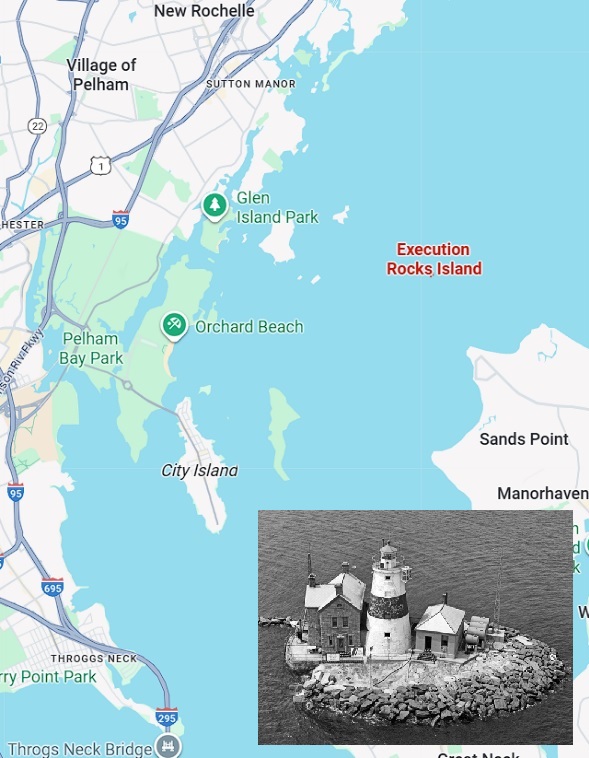
The Execution Rocks Light is a lighthouse located on a tiny island in Long Island Sound between New Rochelle and Sands Point and is visible from the Throggs Neck Bridge. The lighthouse tower is approximately 57 feet tall with a flashing white light every 10 seconds.
When I was growing up on City Island, the legend we were told is that the lighthouse was the location used for execution of the American ‘rebels’ during the Revolutionary War. British soldiers would chain colonial prisoners to the rocks at low tide where they would slowly drown as the tide came in.
While this legend has not been proven, there is some historical basis for this method of execution at Execution Rocks. A 1964 account in The Journal of Long Island History claims that murderers were manacled with chains to staples driven into the rock at low tide.1
In his 1974 book, The Power Broker, Robert Caro recorded the tale that the island on which the lighthouse sits got its name when the early settlers of Sands Point murdered enslaved people by also chaining them to the rocks at low tide.2 References to “Execution Rocks” can be found as early as 1766; before the American Revolution.3
Another possible origin of the name has been proposed by Bryan Penberthy in an article posted on US Lighthouses. Penberthy suggests that the name Execution Rocks likely comes from the large number of ships “executed” on the rocky reef which sits in the middle of a busy shipping lane. He goes on to say:
“During the summer of 1837, it was estimated that nearly 100 ships passed the reef daily. The United States Government had established a lighthouse at nearby Sand's Point in 1809 and although it did warn mariners of the reef offshore, it was ineffective during inclement water.”
 |
To add more grisly history, serial killer Carl Panzram, before being executed for murder, claimed in a posthumous autobiography that in the summer of 1920 he raped and killed ten sailors and dumped their bodies at sea near Execution Rocks Light.
Whatever the truth of these legends, Execution Rocks certainly has a dark history!
The lighthouse was officially activated in 1850 and different keepers and family members lived on the island until it was automated in 1979. On May 29, 2007, the US Coast Guard deemed Execution Rocks Lighthouse no longer necessary, and it was made available to interested parties through the National Historic Lighthouse Preservation Act of 2000. On January 27, 2009, the lighthouse was awarded to Historically Significant Structures, a Philadelphia-based nonprofit corporation dedicated to the restoration of the lighthouse.
Are you adventurous enough to want to spend the night on Execution Rocks? There have been tour companies that arrange day trips and overnight stays, but I was unable to find current offers at the time of this writing.
References
- The Journal of Long Island History, Long Island Historical Society. August 20, 1964 – via Google Books
- Caro, Robert A., The Power Broker, Random House 1974, p. 151
- "Advertisement." New-York Mercury (New York, New York), June 2, 1766. Readex: America's Historical Newspapers
In This Issue
News About the MGS Newsletter
By Peter Biggins
As we reported in the March 2025 Newsletter, John Driscoll passed away January 18, 2025, at the age of 78. "Born in Queens, New York. He had a deep love for genealogy, which he viewed as a challenge to blend the past and the future generations. He was deeply involved with the Middlesex Genealogy Society, where he held roles as Treasurer for eight years and Editor of the MGS Newsletter for 10 years. His last Newsletter was the December 2024 issue."
Steve Flynn took over from John as Treasurer, and I took over as Newsletter Editor.
One of the things John did while he was editor was to have copies of all newsletters put on the MGS website. There are now 165 newsletters on the website. They can be seen at: Newsletters. They represent the history of MGS. As you can see, John was able to collect all but two newsletters. (Let me know if you have the other two.)
The first MGS Newsletter, Volume I, Number 1, appeared in March 1984, 15 months after the founding of MGS in December 1982. The editor was Marianne Sheldon. She reported the officers and their addresses and included that she lived at 3 Revere Road in Darien. By coincidence, the Sheldons happen to have bought that house in 1978 from the Biggins family. I had taken a job in with the Ford Motor Company, so we had to move to Detroit. (After 12 years in Detroit and Dallas, we moved back to Darien in 1989.)
Marianne opened the first Newsletter with the following message, much of which is appropriate for today.
This is the first issue of what we, the officers, hope will become a medium of communication for the membership of the Middlesex Genealogical Society. Through this quarterly newsletter we will try to encourage members in their genealogical searching by offering articles to stimulate and direct research, a place to register family names and a Queries column, where someone may be able to help with a problem ancestor. The newsletter will report on the activities of the MGS - meetings, new acquisitions to the Genealogy section in the Darien Library and special projects in progress.
We welcome input and help from the MGS membership. If you have genealogical information you feel would be of interest to others or any ideas of what kinds of items you would like to see appear in this newsletter, please tell us. Genealogical research is worth nothing if it is not shared. This newsletter is for YOU so let us hear from each of you!
Marianne was editor for 9 years. The full list of editors is as follows.
1984-1993 Marianne Sheldon
1993-1995 Richard Sarr
1995-1996 Florence Wyland
1996-2015 Dorothy Shillinglaw
2015-2025 John Driscoll
2025- Peter Biggins
Items of interest and queries are welcomed for publication. Contact Peter Biggins at pabiggin@optonline.net
In This Issue
Become a Member and Benefit from Having your own Member Page!Have you checked out the Member Pages on the MGS website? Each current member is entitled to create a page outlining the families they are researching or an even more detailed summary of their family history complete with some photos. These pages are discoverable via online searches. This means that you could be as fortunate as some MGS members who have had cousins, researching the same family, reach out to them. Who doesn’t want to discover another cousin with whom to collaborate and share photos! If you have questions reach out to one of the MGS Board members. |