| Vol. XLII, No. 1 | Darien, Fairfield County, Connecticut | March 2026 |
|
|
President's Message
Dear MGS members and friends,
As I begin my new role as President of the Middlesex Genealogical Society, I want to first extend my sincere thanks to Sara Zagrodzky for her outstanding leadership over the past five years. Sara has guided MGS with dedication, thoughtfulness, and steady vision. We are fortunate that she has agreed to remain on the Board and serve as Vice President. Her continued involvement ensures both continuity and strength as we move forward.
MGS thrives because of the commitment of its officers and members. Our programs, resources, and sense of community exist because of your support. If you have not yet renewed your membership for this year, I encourage you to do so soon. Your dues directly support our programs and help ensure we can continue offering meaningful opportunities for learning and connection.
On February 7, we were pleased to host Marian B. Wood for her Zoom presentation, "Genealogical Clues and Cousin Bait on Find a Grave." Marian shared practical strategies for using Find a Grave to research ancestors and burial sites, connect with cousins, and enhance memorial profiles. This was a members-only event, and we are grateful to Marian for an engaging and informative session. A recording of the presentation is available to MGS members; simply send a request to mgsvolunteer@gmail.com to receive access information.
We are also looking forward to our upcoming March 7 program, "Exploring Your Empire State Roots," presented by Michelle Dowd Torosian at the Darien Library. This presentation is open to the public, so please feel free to invite friends who may be interested in genealogical research. Whether you are just beginning to trace New York ancestors or are facing brick walls in Empire State research, this program promises practical guidance and expert insight. We hope you will join us.
It is an exciting time for MGS. I look forward to working with all of you to continue building a vibrant, supportive genealogical community.
With appreciation,
Steve Flynn
President & Treasurer
Middlesex Genealogical Society
In This Issue
Upcoming MGS Presentations
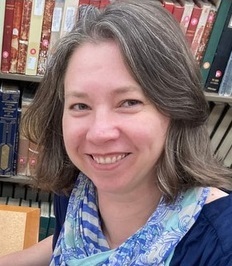 Michelle Dowd Torosian Michelle Dowd Torosian |
Are you interested in tracing your family's roots in New York but aren't sure where to start? Genealogy is a fascinating hobby but tracing your New York ancestors can be challenging. Join professional genealogist Michelle Dowd Torosian as she shares tips and techniques to best utilize the unique records of the Empire State.
Michelle Dowd Torosian is a professional genealogist and founder of Torosian Genealogy, LLC. Her extensive research experience and sharp analytical skills enable her to work with clients undertaking historical research, solving the mysteries lurking in the branches of their family trees, identifying unknown ancestors, and recovering forgotten stories. A former CPA with Deloitte and graduate of Rutgers University, Michelle is a certificate holder from Boston University s Genealogical Research program and the ProGen Study Group. Michelle serves as president of the Westchester County Genealogical Society and is a trustee of the Westchester County Historical Society.
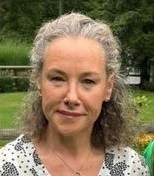 Loretto Leary Loretto Leary |
In the wake of the Great Irish Famine, thousands of men, women, and children crossed the Atlantic in search of survival and opportunity. For many, the Port of New York represented the promise of a new beginning. Yet for countless others, it marked the tragic end of their journey. At the Staten Island Marine Hospital and Quarantine Station now the site of the Staten Island Ferry Terminal thousands of famine immigrants perished shortly after arrival. Their suffering and resilience are commemorated in two nearby burial grounds that remain vital to understanding this chapter of Irish and American history.
Loretto Horrigan Leary, originally from Portumna, County Galway, has made her home in Connecticut for over three decades. A seasoned educator, she has taught Language Arts at the elementary and middle school levels in Darien, New Canaan, Norwalk, and Stamford. As a freelance journalist, her writing has appeared in publications such as The Irish Echo, Irish Central, Irish Examiner USA, and Australia's Irish Scene. Currently, Loretto serves as Educational and Cultural Director of Ireland s Great Hunger Museum of Fairfield and is also Co-Chair of the Connecticut Ireland Trade Commission. Loretto is pursuing her PhD at Trinity College Dublin, where her research focuses on Irish American Famine memory and the memorial landscapes of New York, with particular attention to Staten Island s role in this transatlantic story of loss, survival, and remembrance.
In This Issue
Robert E. "Pete" Kenyon III 1938-2025
By Peter Biggins
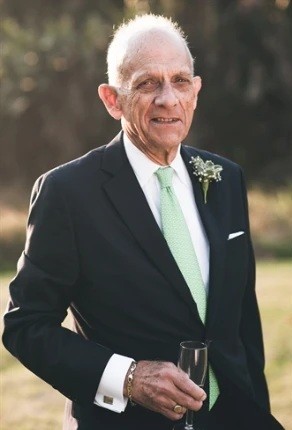 |
Pete Kenyon died December 21, 2025. All of us offer our prayers and condolences to Pete's widow, Kathy, and all of his family. There was a funeral service on December 30 at Saint Luke's Parish in Darien. Obituary
Pete, His Kenyons, and His Y-DNA
Pete became an MGS Board member in 2002 and a Vice President in 2003.
He created a Member Page on the MGS website in 2012. According to his page, Family Surnames include Kenyon, Bokum, Ahrens, Hamblin, Bush, Sutherland, Drummond, Miller, and Barber. Family Locations include England, Scotland, East Prussia, Schleswig-Holstein. Attached to his page is a detailed Kenyon family history going back nine generations to a Kenyon, born in Lancashire, England, eight miles northeast of Manchester.
In 1935, Pete's distant cousin, Howard Nathaniel Kenyon, wrote a book about Kenyons that has been uploaded to the Internet Archive by Allen County Public Library Genealogy Center. See: American Kenyons. Pete used this book to help trace his ancestry back to Rhode Island and England in the 17th century.
Pete's earliest known ancestors go back to 1620 in Oldham, Lancashire, England. Most are on Find a Grave:
- John Kenyon (1620- ? ), Born in Lancashire, England. Emigrated to Rhode Island. See Marilyn Kenyon's discussion in Kenyon One-Name Study
- John Kenyon (1647-1732). Born in Rhode Island. Died in Westerly, Rhode Island. Common ancestor of Pete and Howard Nathaniel Kenyon, author of American Kenyons
- Enoch Kenyon (1686-1781). Born in South Kingstown, Rhode Island. Died in
Westerly, Rhode Island

- Lodowick Kenyon (1748-1823). Veteran of the American Revolution: served in Rhode Island as a private in the regiment of Colonel John Topham in 1776 and 1779. Pete's 5th great grandfather
- Thomas Barber Kenyon (1780-1864). Born in Rhode Island. Died in Jefferson County, New York
- Thomas Barber Kenyon (1813-1886). Born in Amsterdam, Montgomery County, New York. Died in Plainwell, Allegan County, Michigan
- Edwin Marcellus Kenyon (1852-1944). Born in Gull Lake, Kalamazoo County, Michigan. Died in Elk Grove, Cook County, Illinois
- Robert Edwin Kenyon Sr. (1881-1967). Born in Mishawaka, Indiana, or Chicago, Illinois. Died in St. Petersburg, Florida
- Robert Edwin Kenyon Jr. (1908-1996). Born in Chicago, Illinois. Last resided in Greenwich, Connecticut
- Robert Edwin "Pete" Kenyon III (1938-2025). Born in Chicago, Illinois. Died In Darien, Connecticut
Kenyon College in Ohio was founded in 1824 with donations from George Kenyon (1776–1855). He was 2nd Baron Kenyon of Gredington, in the County of Flint, in Wales. The Dictionary of Welsh Biography traces the 2nd Baron's ancestry from Wales back to Peel in Lancashire. American Kenyons does the same, tracing the 2nd Baron's ancestry back to Peel Hall in Little Hulton, Lancashire, about 20 miles from Oldham.
Pete tested his Y-DNA at Family Tree DNA in 2009. He did the Big Y-700 test when it came out in 2019. His Y-DNA can be found on the MGS website. He also joined the Kenyon surname project at FTDNA. Pete and other Kenyons with English ancestry have a common ancestor born around 1200 AD with a mutation called R-FGC39303. The following tree shows their Y-DNA relationship. Three have a specific city or town shown in parentheses, all of which are in Lancashire.
- R-FGC39303, 1200 AD.
- R-A6342, 1650 AD.
- R-A1309, 1750 AD. 2Kenyon 31522, Pete Kenyon 176456
- R-A6341, 1800 AD. Kenyon 989456, Kenyon B12562
- R-FT198982, 1800 AD. Kenyon 293790
- R-FT248385, 1700 AD. Kenyon 795143
- R-FTG84997, 1700 AD. 3 testers
- R-FTH9060, 1800 AD. Kinyon 51572
- Unnamed: Kenyon 425230 (Wigan), Kenyon 152411, Kenyon 63460, Kenyon 299648, Kenyon 314752
- R-FTA91130, 1600 AD. Kenyon 355980 (Liverpool)
- R-FT383870, 1450 AD. Kenyon 1014682, Kenyon 116159 (Chorley), Kenyon N216036, Kenyon IN113960
- R-FT1151942, 1200 AD. 2 testers
- R-A6342, 1650 AD.
Pete's Big Y-700 takes his Y-DNA back 50 steps, including:
- Step 1: R-A1309, 1750 AD. Pete and 1 other Kenyon with English ancestry
- Step 2: R-A6342, 1650 AD. Pete and more Kenyons with English ancestry
- Step 3: R-FGC39303, 1200 AD. Pete and even more Kenyons with English ancestry
- Step 14: R-FGC5494, 2500 BC. Testers: 60% with Irish ancestry and 40% with English ancestry
- Step 19: R-P312, in 2900 BC in southern Germany. The origin of Celts. Most MGS DNA project members descend from this person
- Step 20: R-L151, in 3050 BC in Ukraine. The origin of both Celts and Saxons.
- Step 30: R-M173, in 20,000 BC in Kazakhstan. Branching off from Vikings
- Step 50: A-PR2921, in 232,000 BC. "Adam" in Cameroon, Africa
Thank you, Pete, for being part of MGS and sharing your ancestry on our MGS website, at Member Pages and Y-DNA.
In This Issue
RootsTech 2026
 |
RootsTech 2026 is a family discovery event that takes place at the Salt Palace in Salt Lake City on March 5-7. You can attend in person or online.
- The event is available online and will continue to be available for three years at RootsTech 2026 Schedule.
- There are 200+ online sessions.
- Digital syllabi and class handouts are available online.
- A good way to find a particular topic is to do a Topic search. You can also search by Skill Level.
- Each class session has a chatroom attached. The speaker and moderators check in periodically to help answer questions. This is an opportunity to make connections with others with similar interests too.
FamilySearch International is the hosting organization for RootsTech.
In This Issue
April 12, 1776 - George Washington on the Kings Highway
|
By Peter Biggins (who lives on the Kings Highway in Darien)
On April 12 - 250 years ago - George Washingon traveled through Middlesex (now Darien). He started his day in Fairfield, stopped for lunch in Greenwich, and ended up in New Rochelle. It was 40 miles on the Kings Highway.
He was on his way from Boston to New York City. He had just spent ten months as Commander-in-Chief of the Continental Army in the opening phase of the Revolutionary War at the Siege of Boston (April 19, 1775 to March 17, 1776).
The Kings Highway was the most important road in colonial America and served as the major transportation route for the colonies. It played a vital role in the American Revolution as a military route and was used by George Washington's army during the war. It was also used by early colonists for trade and transportation of goods. It played a critical role in the ultimate independence of colonial America from England even though it was ordered to be built by Charles II of England.
|
|
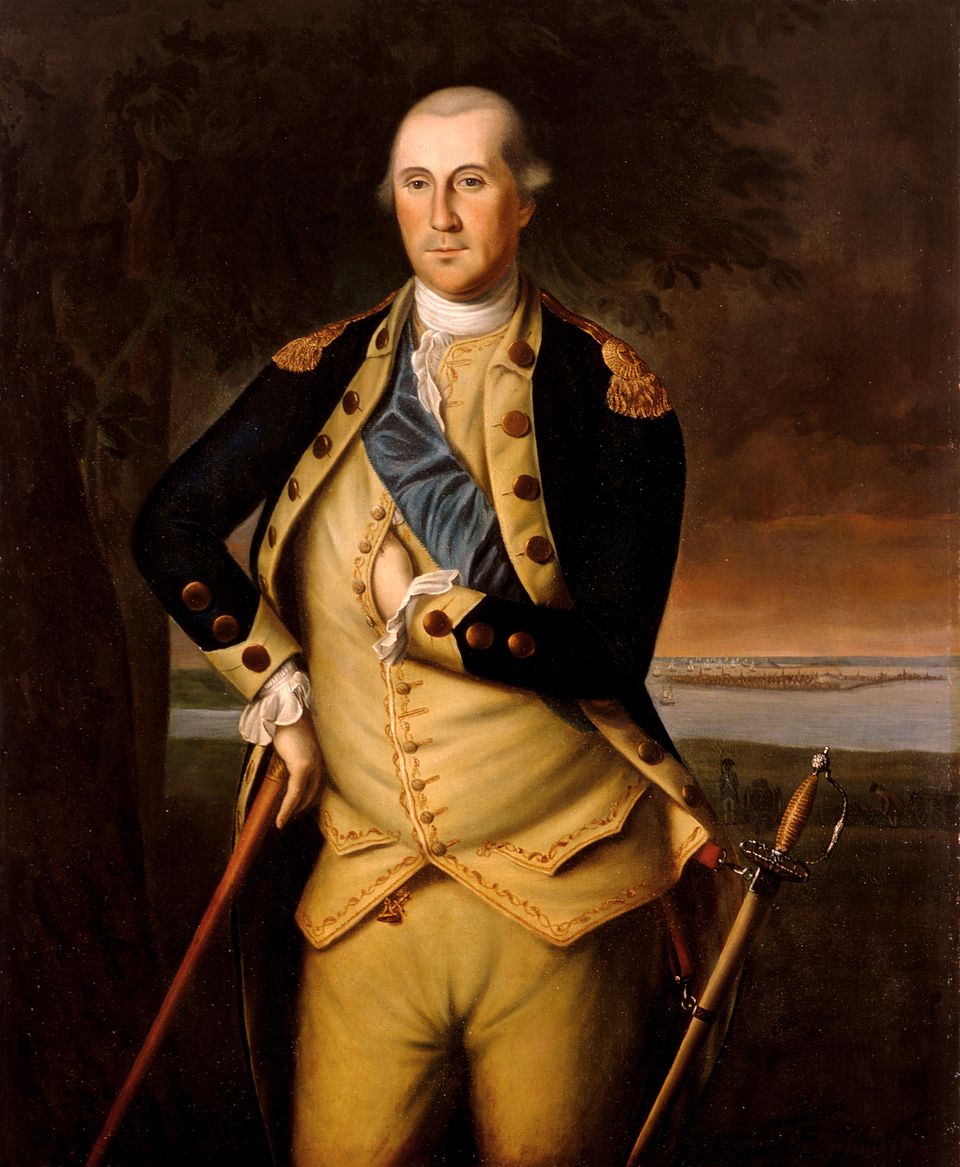 1776 painting of George Washingon, 50 by 39.9 inches, by
 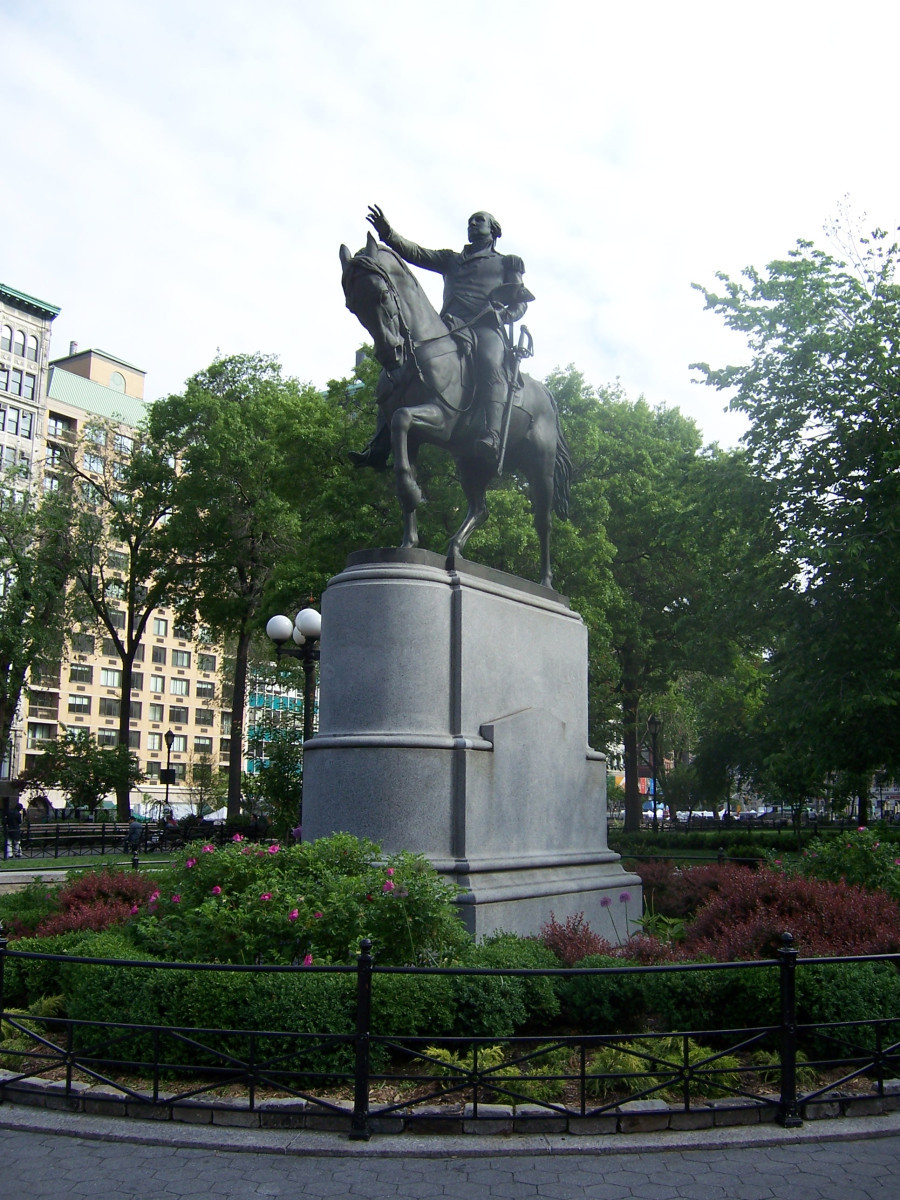 George Washingon on horseback at Union Square. Artist:
Henry Kirke Brown, J.Q.A. Ward. assistant. Dedicated: on July 4, 1856. Source:
George Washingon on horseback at Union Square. Artist:
Henry Kirke Brown, J.Q.A. Ward. assistant. Dedicated: on July 4, 1856. Source: George Washington and his aides made the trip from Boston, Massachusetts, to New York City from Thursday, April 4, to Saturday, April 13, 1776. They took the "lower" road through Providence, Norwich, and New London to New Haven. He left Cambridge on April 4, ate a snack in Boston about two o'clock that afternoon, and proceeded toward Providence. The large expenditure recorded at Dr. Nathaniel Ames's tavern in Dedham, Massachusetts, suggests that he spent the first night of his trip there, 11 miles along the post road from Boston. He reached Providence on the afternoon of April 5 after passing through Wrentham, Massachusetts, which lies about halfway between Dedham and Providence. He left Providence on Sunday, April 7, and reached Norwich, Conn., the next day. He spent the night somewhere along the road between the two towns, possibly at Coventry, Rhode Island, or Plainfield, Connecticut. At Norwich on April 8, he lodged at the house of Jabez Huntington, the father of Col. Jedediah Huntington, and conferred with Gov. Jonathan Trumbull, Sr., either that evening or early the next morning.
On Tuesday morning, April 9, George Washingon proceeded to New London, where he arrived about one o'clock in the afternoon. The expenditure for a "Boatswain & Barges Crew" was probably for transporting his baggage down the Thames River from Norwich, but he may have ridden overland to New London by way of Montville, Connecticut, where, according to local tradition, Col. John Raymond and several others saw him pass by while they were working on the road. At New London he boarded the warship Alfred to confer with Commodore Esek Hopkins, whose fleet had recently arrived in the harbor. Later in the day he inspected the fortifications under construction at New London and Groton. He spent the night at the home of Nathaniel Shaw, Jr., a prominent New London merchant.
From New London, George Washingon traveled with little further delay along the Connecticut coast toward New York. On Wednesday, April 10, he may have lodged at the house of merchant John McCurdy in Lyme, Connecticut. Or he may have extended his journey that day beyond Lyme, crossing the Connecticut River on the ferry to Saybrook and going as far as Guilford, which lies about twelve miles from New Haven, where he is known to have arrived on the morning of Thursday, April 11. Isaac Beers operated a tavern at the corner of College and Chapel streets in New Haven. He tarried only a few hours in New Haven before proceeding to the ferry that crossed the Housatonic River at Stratford and then to Samuel Penfield's tavern in Fairfield, Connecticut, where he apparently spent the night of April 11. Samuel Penfield owned the Sun Tavern on the green in Fairfield.
April 12 in Fairfield County and Westchester CountyOn Friday, April 12, George Washingon passed through Fairfield County, Connecticut, and Westchester County, New York, on horseback on a dirt road described now as the Kings Highway. The road is referred to historically as the Kings Highway. Back then it may have been called the Country Road or have had no formal name.
If he did the 40 miles on horseback. in eight hours, that would be five miles per hour |
On Saturday, April 13, George Washingon went through Pelham on Colonial Avenue, Mount Vernon on Kingsbridge Road, the Bronx on East Gun Hill Road and Van Cortlandt Avenue East, and reached New York City by way of Kings Bridge at the northern tip of Manhattan Island. In Manhattan, he would have taken Broadway, St. Nicholas Avenue, Third Avenue from 80th to 66th Street, and eventually Madison Square, Union Square, Park Row, and Broadway. There is a statue of George Washington on horseback at Union Square Park. He apparently dined on the day that he arrived in New York at Samuel Fraunces's popular tavern on the corner of Pearl and Broad streets.
Sources: Kings Highway and National Archives.
In This Issue
My Connection to George Washington--on WikiTree
By Peter Biggins
I live on the Kings Highway, the same street as George Washington's Mount Vernon. That's a pretty good bragging right. But, on February 18, 2026, I got my regular weekly email from WikiTree and they said I am just 20 steps from George Washington on their Big Tree.
WikiTree was started in 2009 and it's free. The Big Tree is that portion of the people on WikiTree who are currently all connected to each other in a single web of family relationships. WikiTree has about 44.3 million person profiles. Over 87% of them, 38.6 million, are connected on the Big Tree. You can view the connections between them with the Connection Finder. The remaining 13% are currently unconnected and not yet part of the Big Tree.
The 20 steps from George Washington include one up-generation (child-parent), eight down-generation (parent-child) and 11 same-generation (six sibling and five spouse).
The net up/down generation change was seven (eight minus one). George was born in 1732 and I was born in 1939, That is a difference of 207 years, which averages out to 29.6 years per net up/down generation. The 20 steps from George Washington are:
Washington Family
0. George Washington
1. Samuel Washington
(his brother)
2. Harriet Washington
(his daughter)
3. Laura Parks
(her daughter)
Shrewsbury Family
4. Samuel Shrewsbury
(her husband)
5. John Shrewsbury
(his father)
6. Dabney Shrewsbury
(his brother)
7. Rhoda Shrewsbury
(his daughter)
8. John Brickey
(her son)
Hines Family
9. Lizzie Hines
(his wife)
10. Robert Hines
(her brother)
11. Margaret Hines
(his daughter) - born in Virginia, moved to Illinois
12. Fey Deadmore
(her daughter)
Burgie Family
13. Henry Burgie
(her husband)
14. Harvey Burgie
(his brother)
Whalen Family
15. Mary Whalen
(his wife)
16. Kitty Whalen
(her sister)
17. Olive Taylor
(her daughter)
Biggins Family
18. Philip Biggins
(her husband)
19. John Biggins
(his brother)
20. Peter Biggins
(his son)
Steps 0 to 11 are in Virginia. Steps 11 to 20 are in Illinois.
Step 11 is Margaret Catherine Hines Deadmore who was born in 1866 in Roanoke, Virginia. She married a railroad conductor in 1884. Their first child was born in 1887 in Peoria, Illinois. Their fourth child Fay Etta was born in 1894 in Joliet Township, Illinois. Joliet is part of metropolitan Chicago, where my father's family lived and where I grew up.
The email from WikiTree connected me with a total of 12 U.S. Presidents, 8 through my father and 4 through my mother:
|
Eight Presidents through my father 20 steps from George Washington 22 steps from Calvin Coolidge 19 steps from Abraham Lincoln 19 steps from Richard Nixon 25 steps from Barack Obama 23 steps from Ronald Reagan 22 steps from Harry Truman 22 steps from John Tyler |
Four Presidents through my mother 22 steps from James Garfield 20 steps from Ulysses S. Grant 23 steps from John Kennedy 22 steps from Theodore Roosevelt |
I have no idea how unique my connections are. Let me know what your WikiTree connections are: pabiggin@optonline.net
In This Issue
1926 Census of Ireland Available in April
Source: National Archives of Ireland
The National Archives of Ireland provides access to Ireland's public records for researchers worldwide. With over 60 million documents spanning more than 200 years of history, it serves as a rich source of information for researchers of all kinds. Their team of experts curate, preserve and provide access to the records held in the archives, ensuring transparency and a deeper understanding of Ireland's past.
The 1926 census of the Irish Free State will be released to researchers in April 2026.
|
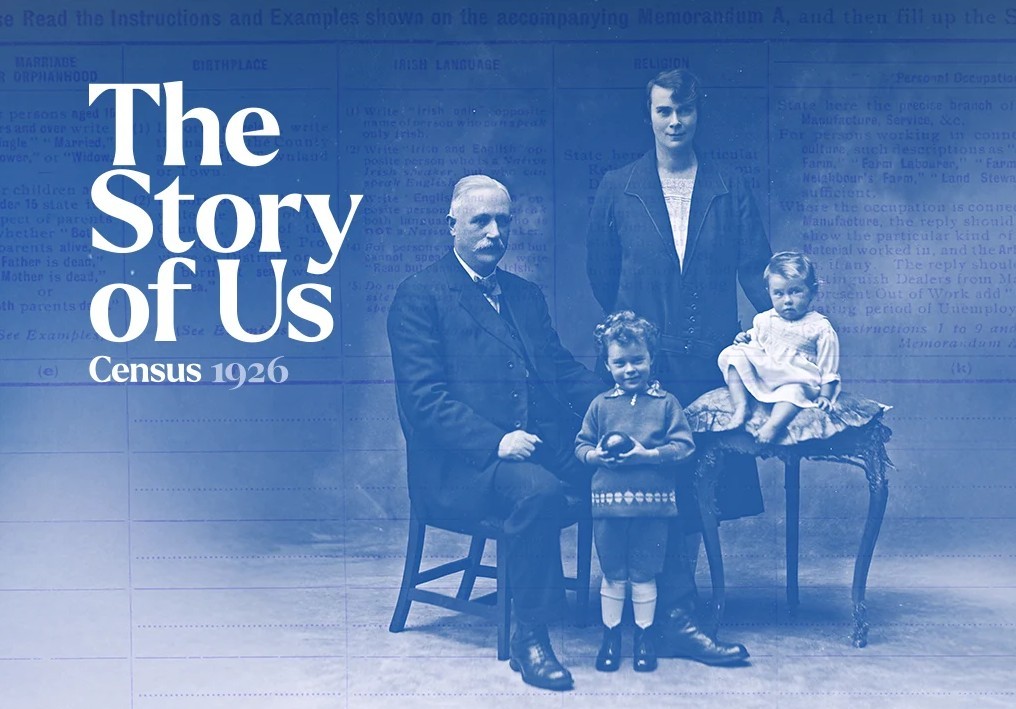 |
This was the first census conducted after the establishment of the Irish Free State. It was taken on April 18, 1926. It provides a detailed snapshot of life in Ireland during that period.
The 1926 census recorded a population of 2,971,992, a decrease of 5.3% from the 1911 census.
The 1926 census data is currently controlled by the Central Statistics Office (CSO) and has been transferred to the National Archives.
Census 1926 is stored in 1,299 boxes, containing over 700,000 return sheets. The returns are laced together in 2,494 canvas volumes each representing an enumeration area within each of the 26 counties. Census 1926 is made up of 21 data sets listed in Household Returns (A Form) and Enumerator Returns (B Form).
The Census returns include the following household data:
- Name and surname
- Relationship to head of household
- Age (in years and months)
- Sex
- Marriage or orphanhood
- Birthplace (including name of townland or town)
- Irish language
- Religion
- Occupation
- Name and business of employer
- Information regarding present marriage required from married women: number of completed years and months of present marriage, and number of children born alive to present marriage
- Information regarding present and previous marriages required from married men, widowers and widows: the number of living sons, daughters, step-sons and step-daughters under 16 years of age, whether residing as members of this household or elsewhere;
- The total area in statute acres of all agricultural holdings (if any) situated in the Irish Free State of which persons usually resident in this household are the rated occupiers.
The Enumerators Returns include the following for each townland/street:
- Whether buildings are private dwelling houses or other buildings
- Whether inhabited or uninhabited
- Number of distinct families living in each house or building
- Name of the head of each family
- Number of males
- Number of females
- Total population
- Number of rooms occupied by each family
You should be able to search the 1926 census records, for free, on April 18, 2026, at Search the Census Records.
Census records for 1901 and 1911 are also available there for free.
In This Issue
Membership
Become a Member and Benefit from Having your own Member Page!Have you checked out the Member Pages on the MGS website? Each current member is entitled to create a page outlining the families they are researching or an even more detailed summary of their family history complete with some photos. These pages are discoverable via online searches. This means that you could be as fortunate as some MGS members who have had cousins, researching the same family, reach out to them. Who doesn't want to discover another cousin with whom to collaborate and share photos! Questions? If you have any questions, contact Steve Flynn at mgsvolunteer@gmail.com |